Cigar label design is far more than a creative aesthetic exercise—it is a precision-driven craft that must align perfectly with a cigar’s physical dimensions to preserve brand identity, ensure seamless application, and enhance the overall smoking experience. Among all cigar measurement metrics, ring gauge stands as the most critical factor for label customization. Defined as the cigar’s diameter measured in 1/64 of an inch, ring gauge dictates the curvature, surface area, and usable design space of every cigar band. A one-size-fits-all label design never works for diverse cigar vitolas, from slim lanceros to bulky gordos. This comprehensive guide breaks down ring gauge fundamentals, key design principles, and tailored strategies for every common cigar size to help designers and brand owners create perfectly fitted, visually cohesive cigar labels.
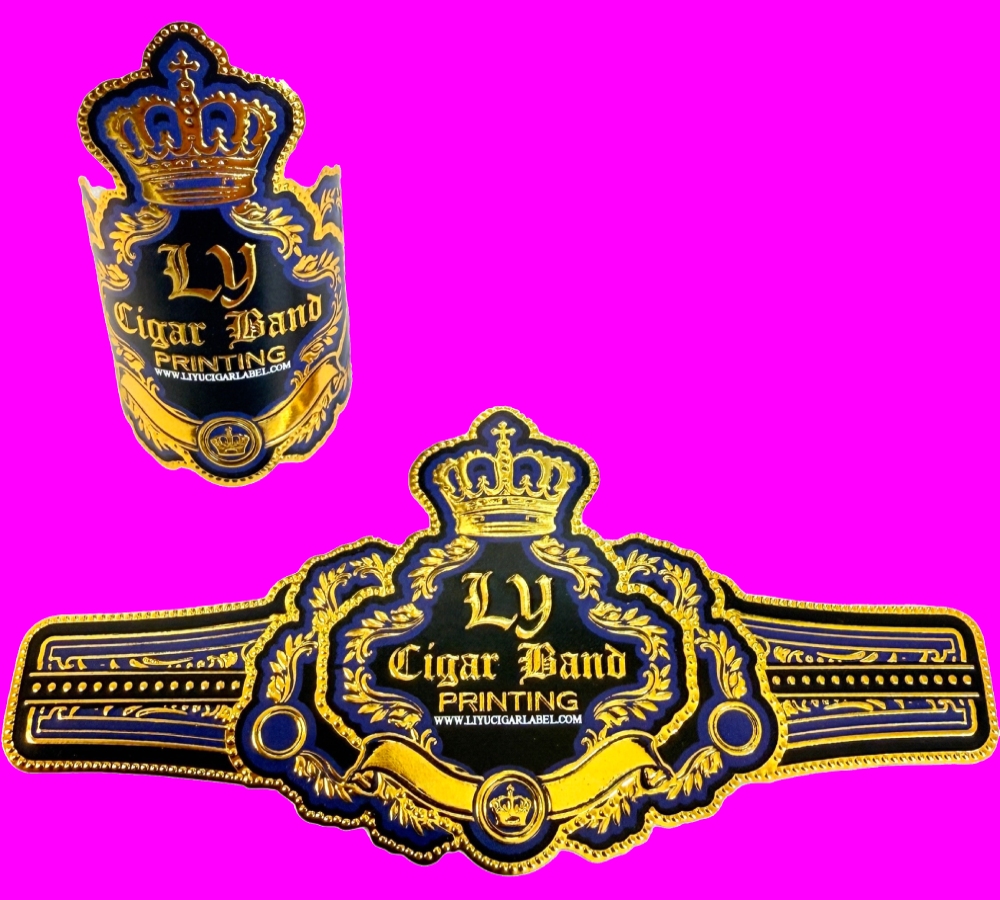
Understanding Cigar Ring Gauge: Core Basics for Designers
Before diving into design specifics, it is essential to master the technical definition of ring gauge and how it translates to label dimensions. In the cigar industry, every unit of ring gauge equals 1/64 of an inch in diameter. For example, a 64-ring-gauge cigar measures exactly one inch in diameter, while a 32-ring-gauge cigar is half an inch thick. Designers can convert ring gauge to millimeters for precise global production using the simple formula: diameter (mm) = ring gauge × 0.397 .
Beyond diameter, ring gauge directly determines a cigar’s circumference—the total length of the label wrap. Standard label designs require a 10% overlap for secure adhesion, meaning the final label strip length must exceed the raw circumference to avoid gaps or peeling . Unlike cigar length, which only affects vertical label placement, ring gauge reshapes the entire label layout, curvature distortion, typography sizing, and graphic scalability. Thin-gauge cigars demand minimal, streamlined designs, while thick-gauge variants support intricate artwork, embossing, and multi-element branding.
Label Design Strategies by Ring Gauge Category
Cigars are broadly categorized into slim, medium, thick, and extra-thick based on ring gauge ranges. Each category has unique physical constraints and design opportunities that define optimal label aesthetics and functionality. Below is a detailed breakdown of design rules for the most popular cigar sizes.
1. Slim Gauge (38–42 Ring Gauge): Delicate, Minimalist Design
Commonly seen in Lancero and Petit Corona vitolas, slim cigars feature ring gauges between 38 and 42, with a diameter of 0.59 to 0.66 inches and a circumference of roughly 1.87 to 2.06 inches . These slender cigars have extremely limited curved surface area, making overdesign the biggest pitfall for label creation.
Key Design Rules: Prioritize minimalism and clean visual hierarchy. Avoid crowded graphics, small fine print, or complex patterns that will blur or warp on tight curvature. Use a compact vertical label layout with a narrow band height of 1.1 to 1.3 inches to prevent excess material overlap. Reserve core branding elements—logo, brand name, and subtle accent colors—for the central flat face of the label, and eliminate secondary text or decorative borders. Thin-gauge labels benefit from matte finishes and thin paper stock to maintain the cigar’s elegant, lightweight silhouette without adding bulk.
2. Medium Gauge (47–52 Ring Gauge): Balanced, Versatile Standard Design
The 47 to 52 ring gauge range covers the most popular commercial cigar sizes, including Churchill, Standard Toro, and Corona. With a diameter of 0.73 to 0.81 inches and a circumference of 4.6 to 5.1 inches, medium-gauge cigars offer the most flexible design canvas, balancing sufficient surface space and natural curvature . This is the industry’s standard range for mass-market cigar labels.
Key Design Rules: Adopt the universal standard band height of 1.5 to 2 inches, which fits all medium-gauge vitolas perfectly . This size supports moderate design complexity: pair a prominent central logo with legible secondary text (origin, blend year, strength rating) and subtle geometric or vintage patterns. Designers can incorporate mild premium finishes like subtle embossing, foil stamping, or soft gloss lamination without overwhelming the cigar’s balanced proportions. Ensure all key visuals are centered on the 2.25-inch visible face panel, leaving the overlapping edge free of critical design elements . This guarantees brand clarity even after application.
3. Thick Gauge (54–56 Ring Gauge): Bold, Feature-Rich Branding
Toro Gordo and thick Robusto cigars fall into the 54–56 ring gauge category, with a diameter of 0.84 to 0.88 inches and a noticeably wide, rounded profile . The expanded surface area eliminates curvature distortion limitations, allowing for bold, high-impact label designs ideal for premium and limited-edition cigars.
Key Design Rules: Leverage the ample canvas to amplify brand luxury. Use full-spectrum color gradients, detailed illustrative artwork, intricate borders, and multi-line descriptive text to enhance visual depth. This gauge range supports prominent premium finishes: heavy embossing, metallic gold/silver foil, debossed textures, and spot UV coating work exceptionally well here, as the wide surface prevents design cramping. Maintain a band height of 1.8 to 2 inches to match the cigar’s robust profile, and extend subtle background patterns across the full label length for a seamless, high-end look. Avoid overly thin fonts, as the wide curve can slightly stretch small text during application.
4. Extra-Thick Gauge (58–60+ Ring Gauge): Luxe, Full-Scale Customization
Gran Gordo and super-sized robusto cigars feature 58+ ring gauges, representing the largest commercial cigar diameters at 0.91 inches or above . These bulky, bold cigars demand oversized, luxurious labels that match their commanding presence, with zero compromise on design detail.
Key Design Rules: Maximize customization with full-scale luxury design elements. Designers can integrate complex layered graphics, detailed crests, signature brand motifs, and comprehensive product storytelling text (blend details, aging process, brand heritage). Opt for a maximum band height of 2 inches to complement the cigar’s thick frame without appearing undersized. Heavy tactile finishes—including raised embossing, textured paper stock, and multi-tonal foil stamping—create a premium tactile experience that aligns with the cigar’s premium positioning. For brand consistency, retain core logo placement while expanding decorative elements to fill the generous surface space evenly.
Universal Ring Gauge Label Design Best Practices
Regardless of cigar size, these industry-standard practices ensure label accuracy, durability, and visual consistency across an entire product line:
1. Prioritize Curvature Compatibility: Always adjust design distortion for curved surfaces. Thin-gauge cigars require flatter, simpler layouts to prevent warped text or graphics, while thick gauges tolerate minor curvature stretching. Test all designs on physical cigar blanks before mass production.
2. Standardize Core Brand Placement: Keep logos, brand names, and primary taglines in the central visible panel of every label, regardless of gauge size. Reserve the overlapping edge for blank space or subtle background textures only, ensuring key branding is always fully visible.
3. Match Material to Gauge Size: Use thin, flexible paper or synthetic stock for slim cigars to avoid rigid, bulky labels. For thick and extra-thick cigars, opt for thicker, textured premium stock to support heavy finishes and enhance dimensionality.
4. Maintain Line Consistency: When designing a full cigar line with mixed ring gauges, retain consistent brand colors, logo styling, and core design language. Adjust only layout density, decorative elements, and label dimensions to fit each size, ensuring unified brand recognition.
Final Thoughts
Ring gauge is the foundation of effective cigar label design. Understanding the unique spatial and curvature constraints of slim, medium, thick, and extra-thick cigar sizes allows designers to move beyond generic templates and create tailored labels that elevate both aesthetics and functionality. By aligning layout complexity, finish selection, and dimensional sizing with specific ring gauge ranges, brands can deliver polished, professional, and luxury-consistent packaging that perfectly complements every cigar’s character, from delicate lanceros to bold gordos. In the competitive cigar industry, precise gauge-based label design is not just a design choice—it is a hallmark of premium quality and meticulous brand craftsmanship.


