

The Art of the Cigar Label
A Forgotten American Masterpiec
Long before the rise of modern advertising, before billboards and television commercials, there was the cigar label. For a brief, brilliant period spanning the late nineteenth and early twentieth centuries, these small pieces of printed paper were among the most sophisticated works of commercial art ever produced. Today, they survive as artefacts of a lost era—testaments to the skill of master lithographers and the fierce competition that once defined the American tobacco industry.
Origins: The Cigar Band
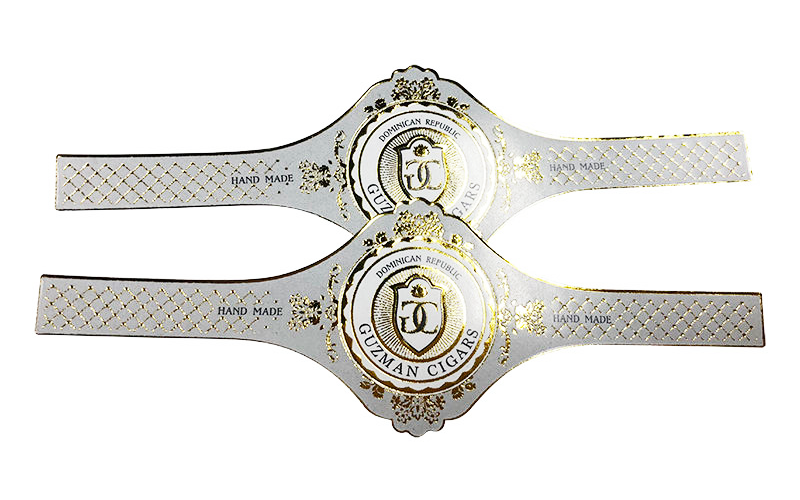
The story of cigar labelling begins not with the box, but with the cigar itself. The cigar band—that small paper ring fitted around the body of a cigar—emerged in Cuba during the 1830s. Modern historians credit a European immigrant to Cuba named Gustave Bock with its invention. Bock, a Dutch-born cigarmaker, ordered paper rings bearing his signature placed on every cigar intended for export to Europe. The bands served a practical purpose: they distinguished genuine Cuban cigars from counterfeits produced by competing European manufacturers.
By the middle of the 1850s, virtually all Cuban cigarmakers were banding their exported products, registering their marks with the government and urging consumers to insist on banded cigars. The band had become both a mark of authenticity and a promise of quality.
The Golden Age of Chromolithography
While the cigar band protected the product, the cigar box label sold it. Around the turn of the twentieth century, cigars were advertised and sold mainly by the colourful, intricate labels that adorned their boxes. At a time when an estimated 1.5 million cigar brands competed for shelf space in American tobacco shops and general stores, manufacturers understood that the most eye-catching image on an open box lid was the surest way to entice a customer.
The artistry behind these labels was extraordinary. They were produced using chromolithography, a colour printing process developed in France during the 1830s. Unlike modern four-colour printing, chromolithography required a separate limestone for each colour used. Most cigar labels required eight to twelve separate stones, with some using as many as twenty. Artists sketched the design, determined the colours, and then craftsmen painstakingly transferred each colour onto the paper using stones that could weigh hundreds of pounds.
It was said that it could take up to twelve men a month to produce a set of labels after a drawing was made as a prototype. The results, however, were breathtaking: rich, vibrant hues that modern printing processes—which use only four colours—cannot replicate.
In 1889, a new technique elevated these labels even further: embossing. After the labels were lithographed, a gold sizing was added to selected areas, and bronze powder was spread over the label, adhering only to the sizing. The sheets were then pressed and polished before proceeding to a forty-ton press, where a die embossed a design into the paper. Some companies reportedly used twenty-four-carat gold dust. With gilding and embossing, the labels appeared three-dimensional, with lifelike hair, clothing, coins and medals. One unintended advantage of the embossing process was that the heavy presses required a better quality, long-fibre rag paper—which is why many of these pieces look as good today as the day they were manufactured.
A Mirror of American Culture
The labels produced between 1870 and the mid-1920s reflected the culture of the time. Cigar manufacturers tried anything and everything to attract smokers, and the result was a panorama of imagery that captured the American imagination.
Beautiful women were among the most common themes. Some collectors developed a special affinity for labels depicting women. But the subjects ranged far beyond: presidents and royalty, Native Americans, wildlife, sports icons, smoking cowboys, and even the new automobile all appeared on these miniature canvases. Some of the imagery now seems quaint, naïve, even odd. Yet within these labels, the beginning of familiar advertising themes can be seen—such as the portrayal of famous men and women, with or without their permission, suggesting product endorsement and use.
One common joke during this period was that the label was of better quality than the cigar itself. Whether or not that was true, the labels certainly demanded more artistry and labour than the product they advertised.
The Decline
The golden age of high-quality stone lithographed cigar labels drew to a close in the 1920s with the advent of photomechanical lithography. Now, printers could get by with only four colours and a lot less time and effort. By 1930, these beautifully chromolithographed and embossed labels were essentially a thing of the past.
During World War I, cigarettes surpassed cigars as the preferred form of smoking, and cigar sales flattened. Fewer companies and less competition resulted in a decline in the artistic labels on cigar boxes. While collectors can find attractive labels from the 1930s and 1940s, most collectible cigar box labels are from the 1890s to the 1920s.
A Collector's Treasure
Fortunately for collectors, much of the unused stock of these labels ended up stashed away and forgotten in storage closets at printing houses, cigar companies and box manufacturers—only to be discovered years later by antique pickers. It is estimated that there may be 100,000 different labels in existence.
Today, these labels are a budding niche of the multibillion-dollar American collectibles market. Some individual labels have appeared on the auction block with asking prices rivaling the cost of a small home. Collectors, estimated to number between five hundred and one thousand hard-core enthusiasts nationwide, have watched the value of their collections rise dramatically. One collector reported that his labels had risen in value an average of 300 percent.
The most collectible labels are unused examples discovered in warehouses, print shops, or from sample books carried by salespeople or industry employees. Antique cigar label proofs—particularly those showing progressive stages such as black-only outlines, partial colouring, or fully finished states—are among the most fascinating and elusive collectibles in the world of vintage advertising.
California is known as a hotbed of these hard-to-find pieces of Americana. Collectors estimate that three-quarters of all labels can be found in California, and about 80 percent of those in Southern California.


